
T: +86-137-0128-0809
E: sales@skyairdome.com
E: sales@skyairdome.com
UNIT 1406B, 14/F, THE BELGIAN BANK BUILDING, NOS. 721 - 725 NATHAN ROAD, KOWLOON, HONG KONG

Views: 0 Author: Site Editor Publish Time: 2025-11-27 Origin: Site


Ice sports are growing rapidly around the world, but traditional ice arenas can be expensive, slow to build, and inflexible. The sports air dome has emerged as a modern solution, combining speed, cost-effectiveness, and comfort. Unlike traditional buildings, these air-supported structures can be installed in days or weeks, maintain a controlled climate, and provide energy-efficient ice surfaces. They are ideal for seasonal training, competitive events, or recreational activities, offering athletes and fans a high-quality venue without the long construction time or high costs of permanent arenas.
An air dome is an inflatable, air-supported structure. It uses lightweight, flexible materials such as PVC-coated polyester or synthetic fabrics. Air pressure inside keeps it upright, stable, and safe.
They are popular for seasonal or temporary ice sports. You can inflate them in weeks, deflate them when not needed. It allows a venue to adapt easily.
Electric blowers supply constant air pressure.
Anchors prevent movement.
Internal climate and pressure can be adjusted.
Lightweight design allows portability.
Traditional buildings include arenas, stadiums, gyms, and indoor rinks. They are permanent, rigid, and made of concrete, steel, or glass. Their construction takes months or even years.
These facilities are designed for large audiences, long-term use, and year-round operation. Once built, their shape and size rarely change.
| Stage | Description | Timeframe |
|---|---|---|
| Site prep | Foundation and leveling | Weeks |
| Structural framing | Steel or concrete skeleton | Months |
| Roofing & insulation | Ensures weather resistance | Months |
| Interior | Rinks, seating, amenities | Weeks–Months |
Costs are high due to materials, labor, and machinery.
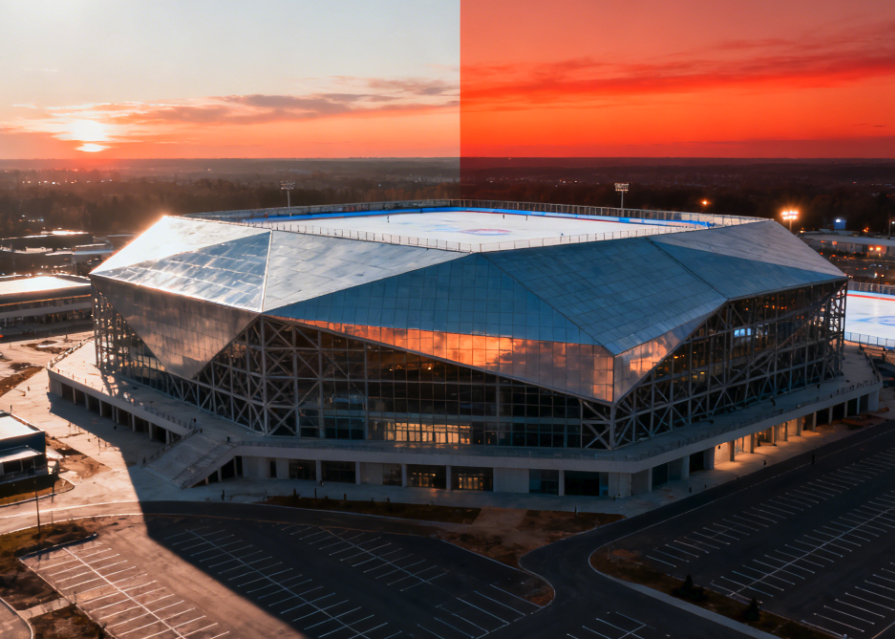
Building an ice sports facility with an air dome is generally much cheaper than constructing a traditional building. The materials used are lightweight and less expensive, and labor requirements are lower. Operational costs are also reduced because air domes consume less energy for heating, cooling, and maintenance.
In contrast, traditional buildings require a significant upfront investment in materials, labor, and heavy machinery. Over time, ongoing operational and maintenance costs add to the overall expenditure, making them a more expensive long-term choice.
One of the major advantages of air domes is the speed at which they can be installed. Depending on the size of the dome, a full setup can take only a few days or weeks, allowing ice sports events to start almost immediately.
Traditional buildings, on the other hand, involve complex construction processes including foundation work, structural framing, roofing, and interior finishing. This process can take months or even years to complete. As a result, air domes provide a faster path to opening an ice sports venue while traditional buildings require significant planning and waiting time.
Air domes offer a level of flexibility that traditional buildings cannot match. They can be inflated, deflated, expanded, or reduced in size to accommodate different needs. This makes them ideal for seasonal or temporary ice sports events.
Traditional structures are fixed in place, and making modifications or expansions often requires costly renovations and extensive planning. While both types of facilities can be customized, air domes excel in scenarios where adaptability is critical, such as hosting multiple sports, seasonal usage, or relocating the venue to a new site.
Air domes provide a controlled environment that greatly enhances comfort for athletes and spectators. They maintain a constant temperature around 20–25°C and have advanced air filtration systems that remove dust, pollen, smoke, and other pollutants, keeping PM2.5 levels below 20. The slightly higher internal air pressure can also improve oxygen intake, benefiting athletes’ performance. In addition, the dome’s structure provides excellent sound insulation, isolating external noise while keeping the activity sounds inside the venue.
Traditional buildings, in comparison, rely on HVAC systems to regulate temperature, which may not be as energy-efficient. Fixed ventilation can limit air quality, and while noise control is easier to manage through architectural design, external sound may still penetrate depending on the location and construction.
| Feature | Air Dome | Traditional Building |
|---|---|---|
| Lighting | Natural light transmittance | Artificial lighting |
| Insulation | High-quality membranes reduce energy loss | Often requires large HVAC use |
| Ice system | Direct-cooling ice saves 60% energy | Standard ice tech consumes more |
| Materials | Recyclable, lightweight | Concrete, steel, glass heavy carbon footprint |
Air domes save energy and align with sustainability goals.
Air domes require regular monitoring to remain safe and functional. The fabric and air pressure systems need inspection to detect early signs of wear or minor leaks. Repairs are generally straightforward and can be completed quickly without heavy machinery. While air domes may not last as long as traditional buildings, proper care can ensure several years of reliable use.
Traditional buildings, on the other hand, are inherently more durable. Constructed from concrete, steel, or reinforced materials, they can last decades or even a century. However, their maintenance is more complex and expensive. Routine inspections, structural repairs, and climate control systems all add to long-term operational costs. Despite this, traditional buildings provide unmatched stability and longevity for permanent ice sports facilities.
Air domes are engineered to withstand various weather conditions, including rain, snow, and strong winds. The high-strength, flexible membrane material acts like a protective shell, providing a safe environment for athletes even during harsh weather. That said, their lightweight materials make them more vulnerable to punctures or accidental damage, so precautions are necessary.
Traditional buildings, in contrast, offer superior structural security. They are sturdy enough to support large crowds and resist natural disasters more effectively. Noise is another factor to consider. Air domes generate a constant hum from the blowers that maintain internal pressure, which may be noticeable during quiet activities. Traditional structures are naturally quieter, as their rigid construction and insulation reduce sound transmission both inside and outside the venue.
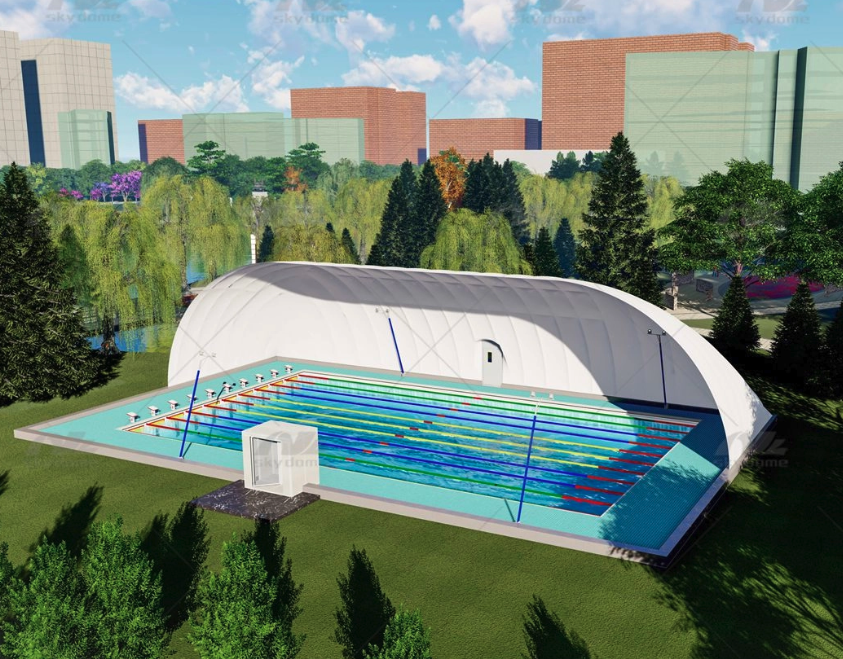
| Advantages | Disadvantages |
|---|---|
| Affordable construction and operation | Fabric susceptible to punctures |
| Fast installation | Noise from blowers |
| Adaptable and portable | Shorter lifespan than concrete structures |
| Energy-efficient | Regular maintenance needed |
| Advantages | Disadvantages |
|---|---|
| Durable, long-lasting | High construction and maintenance costs |
| Permanent amenities and security | Slow to build |
| Noise control easier | Limited flexibility for expansion or relocation |
| Iconic architectural designs | Higher energy consumption |
Budget – Determine how much you can invest upfront and over time. Air domes require lower initial costs and operational expenses, while traditional buildings need a bigger financial commitment.
Frequency and Seasonality of Use – Consider how often the venue will be used and whether usage is seasonal. Air domes are ideal for seasonal sports or temporary events, while traditional buildings work best for year-round activities.
Audience Size – Think about how many people will attend events. Traditional buildings can accommodate larger crowds safely, while air domes are better for smaller to medium-sized groups.
Climate and Energy Costs – Evaluate local weather conditions and energy expenses. Air domes provide energy-efficient climate control and maintain a comfortable environment, whereas traditional structures may consume more energy for heating and cooling.
Long-Term Maintenance – Factor in the effort and cost of maintenance over time. Air domes require regular inspections and minor repairs, while traditional buildings need more complex but less frequent maintenance, ensuring durability.
Flexibility Needs – Decide whether you need to relocate, expand, or modify the facility. Air domes offer high adaptability, allowing for easy adjustments, whereas traditional buildings are fixed and less flexible.
Design and Amenities – Consider what amenities are essential. Air domes can include temporary lounges, equipment rooms, and multipurpose layouts. Traditional buildings support permanent seating, locker rooms, concession stands, and large-scale facilities.
Air domes use electric blowers to supply continuous air pressure. Anchors keep the structure in place, while internal climate and pressure can be adjusted for comfort and performance.
A traditional ice sports building is a permanent structure made of concrete, steel, or glass. It is designed for long-term, year-round use, accommodating large audiences and providing permanent amenities.
Air domes can be fully installed within days or a few weeks, depending on the size, which allows ice sports activities to start quickly.
Traditional ice sports buildings require months or even years to complete due to complex foundation, framing, roofing, and interior work.
Yes, air domes are highly energy-efficient. They allow natural light, provide excellent insulation, and often include energy-saving ice systems that reduce electricity use by more than 50% compared to traditional ice rinks.
Choosing the right facility depends on your budget, audience, and long-term goals. For flexible, energy-efficient, and comfortable ice sports venues, a sports air dome offers unmatched advantages over traditional buildings. Whether for professional teams, local clubs, or seasonal events, it ensures athletes can train and compete year-round. For organizations looking to invest in modern ice sports infrastructure, Sky Dome Co., Ltd. provides turnkey solutions, combining advanced sports air dome technology with sustainable design to create safe, versatile, and high-performance venues.


