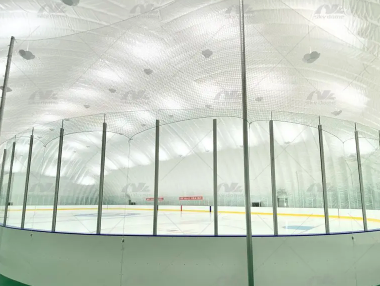
Ice Hockey Domes are transforming the way sports facilities operate. Traditional ice rinks often consume massive amounts of energy for heating, cooling, and lighting, making them expensive and environmentally taxing. In contrast, modern Ice Hockey Domes combine advanced materials, intelligent climate control, and geodesic design to create energy-efficient, year-round ice skating environments. By reducing electricity usage by up to 90% and maintaining stable ice quality, these domes offer a practical, sustainable solution for professional teams, recreational centers, and community programs alike.
Key features of air domes
High tensile strength: The membrane material is strong enough to withstand wind, snow, and other weather stresses, ensuring long-term stability.
Flexible and durable structure: It can bend slightly without damage, allowing the dome to absorb pressure changes while maintaining its shape.
UV resistant and heat reflective: The coating protects the interior from harmful UV rays and reduces heat gain, keeping the ice cool and energy costs low.
Natural light through translucent sections: Some parts of the dome let sunlight in, reducing the need for artificial lighting during the day and creating a bright, comfortable environment inside.
Lightweight yet sturdy: Unlike concrete or steel, the structure is easy to install and move if needed, without sacrificing durability.
Weatherproof and low maintenance: Resistant to rain, snow, and temperature changes, so it requires minimal upkeep compared to traditional buildings.
They create a stable, controlled environment for ice rinks. Pressure inside keeps the structure firm. Membrane insulation helps maintain cold ice in summer and warmth in winter.
Energy Efficiency Advantages
Ice skating domes, especially Ice Hockey Domes, save energy through a clever combination of shape, materials, and smart technology. These features not only reduce operating costs but also create a comfortable, stable environment for skating and training.
Thermal Insulation and Heat Reflection
Air domes are highly effective at thermal insulation. The membrane’s R-value can reach R ~2, compared to ordinary cement walls at R ~0.2. This difference makes a significant impact on energy consumption.
| Feature |
Ice Hockey Dome |
Concrete Wall |
| Thermal Resistance ® |
2 |
0.2 |
| Summer Heat Protection |
High |
Low |
| Winter Cold Isolation |
High |
Medium |
| Energy Savings |
Up to 75% |
Baseline |
During summer, the dome’s reflective membrane reduces heat gain from sunlight. In winter, it prevents cold air from entering and minimizes heat loss. This lowers the need for high-powered AC or heating systems, making ice skating domes more energy-efficient than traditional structures.
Intelligent Climate Control
Modern Ice Hockey Domes often feature intelligent control systems like PRESS. These systems manage air pressure, ventilation, and heating in real time, ensuring energy is used efficiently without compromising ice quality.
PRESS system components include:
Inverter: Adjusts fan speed based on actual pressure needs
PLC: Industrial computer managing automated control algorithms
Sensors: Monitor internal temperature, humidity, and external conditions such as wind or snow
Insulation: Minimizes air leaks and heat transfer
Here’s how it works: if wind or snowfall increases, sensors detect it and adjust internal pressure automatically. Heating modules are fine-tuned to prevent energy loss while maintaining a stable ice surface. Fans and motors run at lower speeds when full power isn’t needed, reducing wear and cutting electricity consumption by 50–90% in typical ice skating domes.
Additionally, the dome’s geodesic shape complements the system. Smooth airflow around the structure prevents drafts and ensures uniform temperature distribution across the ice surface, keeping skating conditions consistent while minimizing energy waste.
By combining thermal insulation, smart control, and optimized airflow, Ice Hockey Domes can drastically reduce operational costs compared to conventional ice rink buildings, while providing a safe, comfortable, and environmentally friendly space for training and competitions.
Comparison with Traditional Ice Rinks
Air domes consume roughly 10–25% of the electricity a concrete rink uses. Total savings can reach 50–90% depending on size, climate, and usage.
| Equipment |
Typical Air Dome Usage |
Traditional Rink Usage |
| Inflation Fans |
40 kWh/day |
N/A |
| LED Lighting |
50 kWh/day |
200+ kWh/day |
| AC / Heating |
0.21 kWh/h per m² |
0.8 kWh/h per m² |
Reduced consumption means lower bills, lower CO₂ emissions, and less noise.

Structural Benefits for Energy Savings
Ice Hockey Domes and ice skating domes benefit not only from technology but also from smart structural design. The combination of dome shape and high-performance materials contributes significantly to energy efficiency.
Dome Shape
The geodesic or spherical shape of air domes gives them a major energy advantage. Compared to rectangular or box-shaped buildings, they have less wall area relative to volume, reducing the total surface exposed to heat transfer.
Air flows smoothly around and over the dome, preventing hot or cold spots
Reduced drafts and stagnant air ensure consistent ice conditions
Minimal thermal bridges lower heat loss, improving winter heating efficiency
Shape naturally supports strong internal air pressure, reducing the energy needed for fans and inflation systems
Because of this, ice skating domes maintain a stable indoor climate without overworking HVAC systems, keeping operational costs lower than traditional ice rinks.
Material Properties
The materials used in Ice Hockey Domes are carefully chosen for durability, flexibility, and thermal performance.
Polyester fiber membranes resist stretching and maintain structural integrity under wind, snow, and pressure changes
PVC and PTFE coatings reflect solar heat and block UV radiation, reducing heat gain during summer
Multi-layer insulation traps heat in winter and minimizes cold infiltration, keeping the ice surface consistent
Lightweight yet strong, these materials allow fast installation, modular expansion, and low maintenance
Together, the dome’s shape and materials create a synergistic effect: less energy is required for heating, cooling, or air circulation, making Ice Hockey Domes highly efficient for year-round use.
Environmental Impact
Ice Hockey Domes and ice skating domes are not only cost-effective—they are environmentally friendly. By consuming significantly less electricity and heating than traditional ice rinks, they reduce the demand for fossil fuels and associated carbon emissions.
Lower energy consumption: High-performance membranes and intelligent climate control systems reduce electricity use for fans, lighting, and heating by up to 50–90%.
Reduced greenhouse gas emissions: Using less energy translates directly to fewer CO₂ emissions, helping facilities meet sustainability goals.
Recyclable materials: Many membranes and coatings, such as polyester fiber and PVC/PTFE layers, can be recycled at the end of their lifespan.
Minimal environmental disruption: Air domes are lightweight and require less foundation work than concrete structures, preserving soil and reducing construction-related emissions.
Support for year-round sustainability: By providing consistent ice conditions without overusing energy, they allow for long-term, eco-conscious operations.
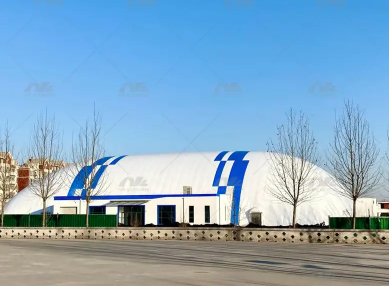
Frequently Asked Questions
Q1: How much energy can an Ice Hockey Dome save compared to a traditional ice rink?
A: An Ice Hockey Dome can save between 50% and 90% of electricity depending on its size, usage, and climate conditions.
Q2: Can air domes be used in extreme cold or hot climates?
A: Yes, multi-layer insulation and intelligent climate control allow air domes to maintain stable temperatures in both very cold and very hot conditions.
Q3: How does natural lighting reduce energy consumption in air domes?
A: Translucent or transparent membrane sections allow sunlight to illuminate the interior during the day, reducing the need for artificial lighting.
Q4: Are the materials used in air domes environmentally friendly?
A: Yes, many membranes and coatings, such as polyester fiber and PVC/PTFE layers, are recyclable and contribute to a lower carbon footprint.
Q5: What makes Ice Hockey Domes more energy-efficient than traditional concrete rinks?
A: Their geodesic shape, high-performance membranes, multi-layer insulation, and intelligent climate control all work together to minimize energy consumption.
Conclusion
Modern Ice Hockey Domes are more than just energy-saving structures—they are sustainable, durable, and cost-effective solutions for year-round ice sports. With high-performance membranes, geodesic architecture, natural lighting, and intelligent climate control systems, they drastically reduce energy consumption, lower operational costs, and minimize environmental impact.
For organizations looking to upgrade or build new ice facilities, Sky Dome Co., Ltd. offers professional design, custom installation, and ongoing support for Ice Hockey Domes that meet both performance and sustainability goals. Embrace the future of ice sports with innovative domes that combine efficiency, comfort, and environmental responsibility.


