
T: +86-137-0129-0877
E: sales@skyairdome.com
E: sales@skyairdome.com
UNIT 1406B, 14/F, THE BELGIAN BANK BUILDING, NOS. 721 - 725 NATHAN ROAD, KOWLOON, HONG KONG

Views: 0 Author: Site Editor Publish Time: 2026-04-20 Origin: Site


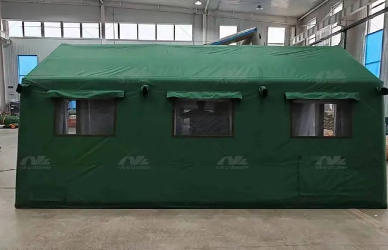
Military inflatable tents are integral to tactical operations and emergency relief efforts. Their ability to be rapidly deployed in remote or hostile environments makes them essential for military forces, disaster relief teams, and humanitarian missions. However, to withstand the demanding conditions they are often exposed to, heavy-duty military inflatable tents must be built with high-quality materials and meet rigorous construction standards. In this article, we will explore the key materials used, the construction standards required, and the real-world applications of these durable, rapid-deployment shelters.
Heavy-duty military inflatable tents are designed with materials that provide durability, flexibility, and resistance to extreme environmental factors. The materials used in the construction of these tents are crucial for ensuring they withstand harsh conditions, including high winds, extreme temperatures, and heavy rain. Let’s take a closer look at the materials commonly used in military inflatable tents.
PVC-coated fabrics are the most commonly used material for military inflatable tents. These fabrics are made from polyester or nylon base fabrics coated with polyvinyl chloride (PVC), making them highly durable, waterproof, and UV-resistant. PVC-coated fabrics are ideal for military tents due to their ability to withstand abrasions, mold, and mildew. They also provide excellent weather resistance, making them suitable for various weather conditions, from extreme heat to heavy rain and snow. Additionally, PVC-coated fabrics offer high tensile strength, ensuring the tent’s structural integrity under pressure.
In addition to PVC-coated fabrics, some military inflatable tents use polyester and nylon materials for their flexibility, strength, and lightweight properties. These materials are often used for the tent's inner linings or as an additional layer of reinforcement. Polyester and nylon are both resistant to wear and tear, and they maintain their integrity even in extreme temperatures. They are also relatively light, which is important for mobility and transportability. However, they may not offer the same level of waterproofing and UV resistance as PVC-coated fabrics.
The seams and joints of military inflatable tents must be exceptionally strong to handle the internal air pressure and external forces like wind and snow. Reinforced seams are made with high-strength threads and additional layers of material to prevent tearing or splitting. These reinforced seams ensure that the tent remains intact during high-pressure inflation and in challenging weather conditions. Special attention is also given to the joint areas, where the tent's inflatable beams or chambers connect, as these areas experience the highest stress during use.
Military inflatable tents must adhere to strict construction standards to ensure they meet the high demands of tactical and emergency operations. These tents are designed for rapid deployment and must be able to withstand a wide range of environmental conditions. The following construction standards are essential for creating a durable and reliable military inflatable tent.
One of the core features of heavy-duty military inflatable tents is air beam technology. Unlike traditional tents, which rely on metal poles or frames for support, inflatable tents use air-filled beams to provide structure. These air beams are made from durable, pressure-resistant materials that allow the tent to be inflated quickly and set up without the need for complex assembly. The use of air beams provides the advantage of a lightweight structure, which makes it easier to transport and deploy the tent. Additionally, air beams are highly flexible, allowing for easy reconfiguration of the tent’s shape and layout based on mission requirements.
To ensure that military inflatable tents can withstand external forces like strong winds and snow, their construction must be pressure-resistant. The material used for the air beams and the outer shell must be able to handle the internal pressure caused by inflation, as well as the external pressure from weather conditions. The design of these tents also includes features like reinforced corner joints, extra layers of material at stress points, and heavy-duty zippers and fasteners to prevent failure under pressure.
Weather resistance is one of the most critical aspects of military inflatable tents. These tents must be able to protect personnel and equipment from a wide range of environmental challenges, including extreme temperatures, heavy rainfall, and high winds. To achieve this, the materials used in construction must be waterproof, UV-resistant, and capable of insulating against both heat and cold. Heavy-duty military inflatable tents are equipped with features such as waterproof coatings, heat-sealed seams, and reinforced fabrics to provide effective protection against adverse weather conditions.
Given their use in military operations and emergency situations, inflatable tents must meet stringent safety standards. UV resistance is particularly important to prevent fabric degradation from prolonged exposure to sunlight. Heavy-duty military inflatable tents are treated with UV-resistant coatings to prolong their lifespan and maintain their structural integrity over time. Additionally, these tents must be fire-resistant to ensure safety in operational areas where open flames, equipment, and other fire hazards are present. Fire-resistant treatments are applied to both the fabric and seams to reduce the risk of fire spreading in an emergency.
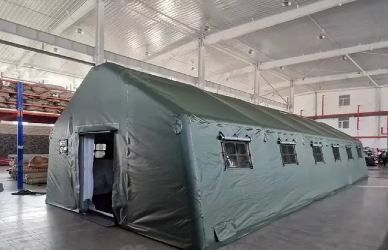
Military inflatable tents are designed with several key features that make them suitable for both military and emergency operations. These features ensure that the tents provide the necessary functionality, durability, and ease of use in the field.
Feature | Description |
Air Beam Technology | Uses inflatable beams instead of metal poles, providing quick setup and flexibility. |
Weather Resistance | Waterproof, UV-resistant materials that withstand extreme conditions like rain, snow, and heat. |
Quick Setup | Rapid inflation and setup within minutes, ideal for urgent field operations. |
Portability | Lightweight and compact when deflated, making them easy to transport and relocate. |
Durability | Strong, reinforced seams and fabrics designed to handle high pressure and wear. |
Customizable Layout | Modular design allows for flexibility in layout and size to accommodate various mission needs. |
The advantages of using heavy-duty military inflatable tents are clear, especially when considering their role in both military operations and disaster relief. These tents offer several significant benefits that enhance their effectiveness in the field.
Heavy-duty military inflatable tents are built to withstand harsh environments. The use of durable materials like PVC-coated fabrics ensures that the tents remain intact and functional in extreme weather conditions. Whether it's snowstorms in remote areas or high winds in combat zones, these tents provide reliable protection for personnel and equipment.
Inflatable tents are known for their rapid deployment capabilities. With inflation systems that can have the tents fully set up in minutes, they provide a significant advantage in time-sensitive operations. Their modular design allows for easy reconfiguration to meet the needs of different mission types, from field hospitals to command posts.
One of the key benefits of inflatable tents is their portability. When deflated, they are compact and lightweight, making them easy to transport by vehicles, helicopters, or even by hand. This mobility allows military teams and emergency responders to quickly relocate the tent to different areas as needed.
Heavy-duty military inflatable tents have been successfully deployed in various military operations, disaster relief efforts, and humanitarian missions.
· Military Operations: During the Gulf War, inflatable tents were used to establish mobile command posts in desert regions. Their quick setup allowed military personnel to establish command centers in rapidly changing environments, facilitating strategic operations.
· Disaster Response: After the 2010 Haiti earthquake, inflatable tents were deployed by humanitarian organizations to provide temporary medical facilities and housing for survivors. These tents helped address the immediate needs of thousands of displaced individuals.
· Humanitarian Missions: Inflatable tents have been used in Syrian refugee camps to provide temporary housing and medical services. Their ability to withstand harsh weather and offer flexible layouts made them ideal for these fast-developing crises.
Heavy-duty military inflatable tents are constructed with reinforced fabrics like PVC-coated materials and have enhanced structural support to withstand extreme weather and high-pressure conditions.
With proper care and maintenance, these tents can last for many years, even under frequent use in harsh environments, thanks to durable materials and reinforced seams.
Yes, heavy-duty military inflatable tents are designed to withstand a wide range of temperatures, from intense heat to freezing cold, thanks to their weather-resistant materials and insulation options.
Yes, military inflatable tents come in various sizes, from small command posts to large field hospitals, with modular designs that can be customized to meet specific mission requirements.
Heavy-duty military inflatable tents are critical for successful field operations, offering quick deployment, flexibility, and durability in extreme conditions. These tents are built with strong materials, advanced construction techniques, and a focus on rapid setup, ensuring that military and emergency teams can operate effectively in the most demanding environments. Companies like Sky Dome Co., Ltd. lead the way in providing high-quality inflatable tents designed to meet the rigorous demands of tactical operations. By understanding the materials, construction standards, and benefits of heavy-duty inflatable tents, teams can make informed decisions when selecting tents for their specific operational needs. Sky Dome Co., Ltd. ensures that these tents offer reliability, strength, and quick adaptability to various mission types, making them an essential tool for military and emergency responders worldwide.


