
T: +86-137-0128-0809
E: sales@skyairdome.com
E: sales@skyairdome.com
UNIT 1406B, 14/F, THE BELGIAN BANK BUILDING, NOS. 721 - 725 NATHAN ROAD, KOWLOON, HONG KONG

Views: 0 Author: Site Editor Publish Time: 2025-11-30 Origin: Site


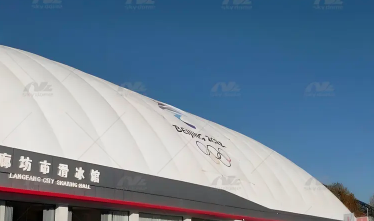
A commercial Ice Hockey Dome provides a safe, controlled environment for hockey and figure skating activities year-round. These specialized structures protect ice surfaces from harsh weather while maintaining consistent temperature and air quality. Whether air-supported or rigid-frame, a well-maintained dome ensures safety, durability, and energy efficiency. Understanding proper maintenance practices is key to extending the lifespan of an Ice Hockey Dome and keeping it fully operational for players and spectators alike.
A commercial ice hockey dome is a specialized structure designed to cover a rink. They can be:
Air-supported/Inflatable domes – lightweight, easy to install, portable
Rigid-frame domes – permanent, insulated, built for year-round use
Materials usually include high-strength PVC-coated fabrics, reinforced membranes, or steel frames. Domes provide weather protection, temperature control, and structural safety for hockey activities.
Several factors impact how long a dome lasts:
Material durability – membranes degrade under UV and weather stress
Structural load – snow, wind, and heavy use affect frames and anchoring
Installation quality – improper tension or anchoring can cause tears
Environmental conditions – sun, precipitation, and temperature swings
Maintenance frequency – regular inspection prolongs lifespan
Typical Lifespan Estimates:
| Dome Type | Lifespan |
|---|---|
| Inflatable/Air-supported | 10–20 years |
| Rigid-frame, membrane-covered | 20–30 years |
| Hybrid structures | 15–25 years |
Daily maintenance keeps a commercial Ice Hockey Dome or figure skating dome safe, functional, and energy-efficient. A structured daily routine helps spot minor issues early and prevents long-term damage.
The membrane is the main structural element of the dome. Small punctures or leaks can reduce air pressure, destabilize the structure, and increase energy use. Walk the perimeter and inspect for holes, tears, or abrasions, especially at corners, seams, and entrances. Early detection allows temporary patches or professional repairs before problems grow.
Cables, fasteners, and anchors maintain the dome’s shape. Daily checks ensure wind, snow, or regular use hasn’t loosened anything. Look for wear, corrosion, or misalignment, and adjust as needed to keep the dome stable under changing loads.
Snow, ice, or leaves add weight and stress to the membrane. Clear surfaces promptly using soft brushes, non-abrasive tools, or air blowers. Remove water or ice near entrances to prevent hazards. Regular cleaning protects both the structural integrity and the performance of the ice surface.
Proper weekly and monthly maintenance ensures the ice hockey dome stays safe, durable, and operational. These checks are more in-depth than daily routines and help prevent long-term wear or system failures.
Over time, dirt, dust, and environmental residue accumulate on the dome’s surface. Weekly cleaning prevents material degradation and maintains appearance and performance. Use soft brushes or mild cleaning solutions recommended by the manufacturer. For rigid panels, wipe down surfaces and check for scratches or discoloration. This practice also improves the effectiveness of HVAC and lighting systems, as clean surfaces reflect light and heat better.
Weekly and monthly inspections of the frame and supporting structures are crucial for detecting fatigue or corrosion in a sports air dome. Examine all joints, bolts, and fasteners for signs of loosening, rust, or bending. Focus on areas exposed to high stress or vibration. Tighten or replace components as needed. This ensures the sports air dome retains proper shape and stability under snow, wind, or internal pressure.
Safety systems require thorough periodic testing. Walk through all emergency exits to ensure they open smoothly and are free from obstructions. Activate alarms and backup lighting to confirm functionality. Proper testing reduces risk during unexpected situations and ensures the dome meets regulatory safety standards.
Airflow, humidity, and temperature control are critical inside an ice hockey dome. Monthly checks involve inspecting filters, ducting, and fans for blockages or wear. Verify that heating, cooling, and dehumidification systems operate efficiently. Addressing minor issues early prevents larger energy losses and maintains a comfortable environment for players and spectators.
External weather loads can impact an Ice Hockey Dome’s integrity. During weekly or monthly inspections, evaluate accumulated snow or ice on the dome and check structural tension for wind resistance. Remove heavy snow or ice carefully to avoid damaging the membrane. Monitoring these conditions ensures the Ice Hockey Dome can withstand seasonal changes without compromising safety or stability.
| Task | Frequency | Notes |
|---|---|---|
| Membrane inspection | Weekly | Look for tears, UV damage |
| Frame bolts & anchors | Monthly | Tighten and lubricate |
| HVAC/ventilation | Weekly | Ensure airflow and humidity control |
| Exterior cleaning | Monthly | Remove dirt, snow, debris |
Pre-winter: Inspect entire structure, reinforce tension, clear drainage
Winter: Monitor snow loads, interior pressure, and heating systems
Spring/Off-season: Remove anchors, store movable panels, check for mold or corrosion
Post-storm: Repair any storm-related damages promptly
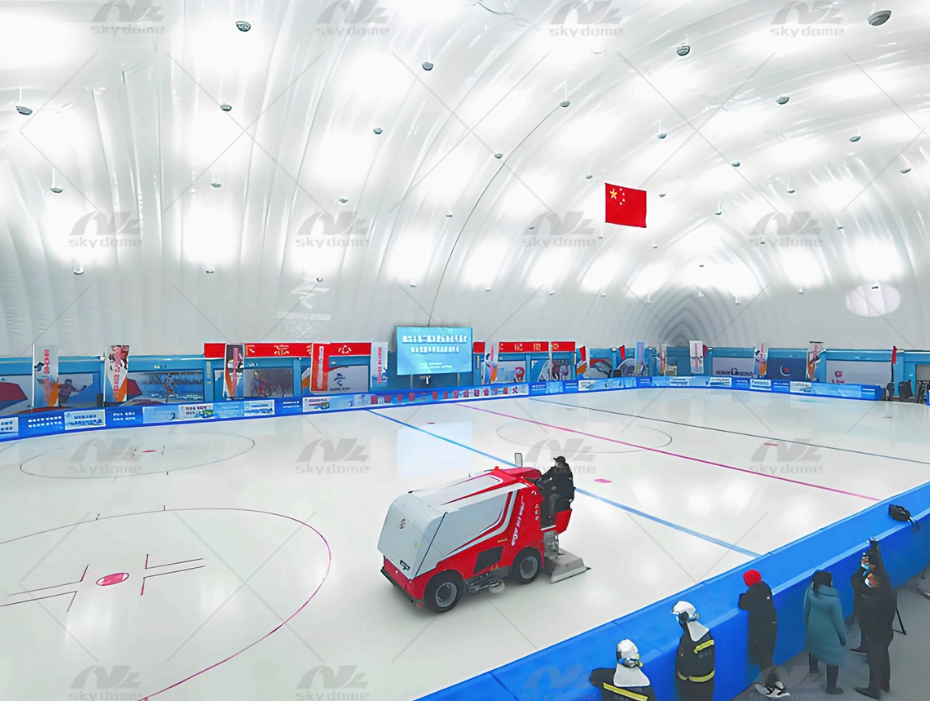
Schedule regular inspections and preventive maintenance
Adjust tension seasonally to match temperature changes
Treat and clean membranes to reduce UV and debris damage
Keep anchors and frames lubricated and corrosion-free
Work with experienced contractors for repairs and retrofits
A dome should be visually inspected daily for membrane damage, loose anchors, and debris, while more in-depth structural and system checks should occur weekly or monthly.
The most common issues include membrane punctures, loose tension cables, snow accumulation, HVAC malfunctions, and wear on fasteners or structural frames.
Yes, heavy snow or ice buildup can strain the membrane and frame. Regular removal and tension checks prevent structural stress and extend the dome’s lifespan.
Proper HVAC operation controls humidity, airflow, and temperature inside the dome. Malfunctions can increase condensation, stress the membrane, and create unsafe conditions for users.
Air-supported domes usually last 10–20 years, rigid-frame membrane domes last 20–30 years, and hybrid structures last 15–25 years, depending on maintenance, weather, and usage.
Maintaining a commercial Ice Hockey Dome is more than routine cleaning—it’s a proactive approach to protect the structure, ensure safety, and optimize performance. From daily inspections to seasonal checks, consistent maintenance prevents damage, reduces repair costs, and extends the dome’s lifespan. For organizations seeking durable, high-quality dome solutions, Sky Dome Co., Ltd. offers expert design, installation, and maintenance services to help your Ice Hockey Dome perform at its best for years to come.


