
T: +86-137-0129-0877
E: sales@skyairdome.com
E: sales@skyairdome.com
UNIT 1406B, 14/F, THE BELGIAN BANK BUILDING, NOS. 721 - 725 NATHAN ROAD, KOWLOON, HONG KONG

Views: 0 Author: Site Editor Publish Time: 2026-04-20 Origin: Site


Military inflatable tents have become a crucial asset in modern tactical operations, offering flexible, quick-deploy solutions for various mission-critical needs. These tents are designed for rapid setup, allowing military and emergency teams to establish operational spaces, medical facilities, and command posts with minimal delay. Their portability and ease of deployment make them ideal for field missions, especially in remote or hostile environments. In particular, the ability to quickly deploy command posts and field hospitals ensures that military personnel and medical teams can respond immediately to dynamic situations, providing a secure and functional space for coordination, communication, and care in combat zones or during emergency relief efforts. The speed and efficiency of inflatable tents significantly enhance operational effectiveness, ensuring that missions proceed without unnecessary delays.
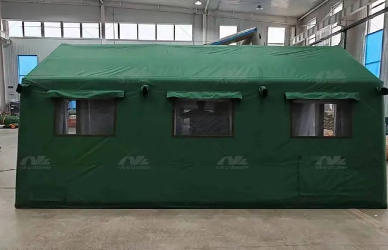
A military inflatable tent is a portable, temporary shelter designed for rapid deployment in tactical and emergency situations. Unlike traditional tents that rely on rigid poles and frames for structure, these tents use inflatable air beams or chambers to provide stability and support. The structure consists of durable, weather-resistant fabric that is inflated with air to form a strong, self-supporting framework. This unique design eliminates the need for external support systems, making the tents lighter, easier to set up, and more adaptable in challenging environments.
Military inflatable tents are specifically engineered for flexibility, quick deployment, and portability, making them ideal for high-pressure field missions.
· Flexibility: These tents can be quickly reconfigured to fit different mission types, whether it’s a command post, medical facility, or shelter. The modular design allows for easy adjustments in size, shape, and internal layout to accommodate various needs.
· Quick Deployment: The primary feature of military inflatable tents is their rapid setup capability. With the help of an air pump, the tents can be inflated and fully set up in just a few minutes, allowing military and emergency teams to establish functional spaces without delay.
· Portability: When deflated, inflatable tents are compact and lightweight, making them easy to transport and store. This portability allows them to be moved to different locations quickly, providing shelter and operational support where it is most needed, even in remote or difficult-to-reach areas.
These features ensure that military inflatable tents offer an ideal solution for rapid and efficient operations in various tactical and emergency scenarios.
Military inflatable tents are increasingly used as mobile command posts in tactical operations. These tents provide a centralized space for military leaders and their teams to coordinate and manage operations in the field. The inflatable design allows for rapid deployment, creating a secure and functional workspace in remote or combat zones where traditional infrastructure may not be available. Command posts typically include communication equipment, maps, and computing systems that require a stable, controlled environment. Inflatable tents meet these needs by offering an adaptable, portable solution that can be quickly set up and relocated as operations evolve.
Several features make inflatable tents particularly well-suited for military command operations:
· Quick Setup: Inflatable tents can be fully deployed in just minutes, ensuring that command posts are operational without delay, even in fast-paced and time-sensitive situations.
· Weather Resistance: Designed with durable, weather-resistant materials, these tents protect personnel and equipment from extreme weather, such as high winds, heavy rain, and temperature fluctuations.
· Customizable Space: The modular design allows for flexible layouts to accommodate various communication and operational equipment, along with personnel.
· Portability: Their compact size when deflated makes inflatable tents easy to transport, enabling rapid relocation of command posts across different operational areas.
Compared to traditional command post setups, inflatable tents offer several significant advantages:
· Mobility: Inflatable tents are far more mobile than traditional structures, allowing military forces to establish and relocate command posts with ease. This is particularly beneficial in dynamic combat situations or during disaster response when the command post may need to move quickly.
· Quick Setup: Traditional command posts often involve the construction of larger, more permanent structures, which can take longer to set up. In contrast, inflatable tents can be inflated and operational within minutes, ensuring that military operations can continue without unnecessary delays.
· Flexibility: Inflatable tents can be easily modified in size and layout to meet specific operational requirements, offering greater versatility for varying mission needs.
· Cost-Effectiveness: Inflatable tents are a more economical option than traditional command post infrastructure, which often requires more resources and time to build.
Military inflatable tents are essential for setting up field hospitals in combat zones, disaster areas, or remote locations. These tents provide immediate shelter for medical personnel and patients, offering a flexible space to accommodate medical equipment like surgical tables, life-support systems, and supplies. Their rapid deployment makes them ideal for emergency situations where quick medical intervention is required.
Key design considerations for inflatable field hospitals include:
· Ventilation and Airflow: Proper ventilation systems to ensure air quality and comfort for patients and staff.
· Lighting: Built-in provisions for electric lighting, crucial for medical procedures.
· Medical Equipment Compatibility: Designed to fit medical tools like beds, ventilators, and stretchers.
· Waterproof and Hygienic Materials: Easy-to-clean, waterproof materials to maintain hygiene.
· Temperature Control: Options for heating or cooling to maintain comfortable and optimal conditions for both patients and equipment.
Military inflatable tents offer several benefits:
· Rapid Deployment: Can be set up in minutes, providing immediate shelter and medical care.
· Flexibility: Adaptable to different medical needs, such as triage or intensive care.
· Mobility: Easy to transport and relocate as needed, especially in dynamic combat zones.
· Protection from the Elements: Durable and weather-resistant, ensuring a safe environment for patients and staff.
· Improved Patient Care: Provides a secure, controlled space for better patient treatment in challenging conditions.
Feature | Command Posts | Field Hospitals |
Space Requirements | Medium to large for equipment & staff | Large for beds, medical equipment, and staff |
Weather Resistance | High, due to varying climates | High, for protection in extreme conditions |
Setup Time | Quick, with modular configuration | Quick, flexible layout for emergency care |
Portability | Easy to transport and relocate | Portable for quick setup in disaster zones |
Customization | Configurable for tech, communication | Adaptable for medical setups and patient care |
Inflatable tents are designed for rapid deployment, making them ideal for time-sensitive missions such as setting up command posts or field hospitals. Their quick setup allows military and emergency teams to establish operational spaces within minutes, ensuring that critical missions can begin immediately without delay. This fast deployment is especially crucial in dynamic environments where every minute counts.
One of the key benefits of inflatable tents is their versatility. These tents can be easily reconfigured to suit different mission requirements, whether for a command post, medical facility, or shelter. The modular design allows for flexibility in layout, enabling the space to be adapted for different numbers of personnel, equipment, and specific operational needs.
Inflatable tents are built to withstand harsh weather and challenging environments. Constructed from durable, weather-resistant materials, they offer protection against heavy rain, strong winds, and extreme temperatures. Whether deployed in combat zones or during disaster response, these tents ensure that personnel and equipment remain protected, maintaining functionality in even the most extreme conditions.
· Military Operations: During the Gulf War, inflatable tents were deployed as mobile command posts in desert regions. Their quick setup allowed for efficient coordination and communication in remote areas, ensuring smooth military operations.
· Disaster Response: After the 2010 Haiti earthquake, inflatable tents were used to establish field hospitals and shelters for survivors. These tents provided essential medical care and housing in the immediate aftermath of the disaster, where traditional infrastructure was destroyed.
· Humanitarian Missions: During the 2014 Ebola outbreak in West Africa, inflatable tents were used to create emergency medical facilities. These tents were deployed rapidly to offer isolation units and medical care in regions with limited infrastructure, playing a key role in controlling the outbreak.
· Military Operations: Inflatable tents were used in Operation Desert Storm to create mobile command centers in challenging environments like deserts. Their portability allowed military forces to set up operations quickly and move as needed.
· Disaster Response: Following the 2011 Japan earthquake and tsunami, inflatable tents were used to house displaced people and provide medical care, offering shelter and a controlled environment for emergency operations.
· Humanitarian Missions: During the Syrian refugee crisis, inflatable tents were used to create safe zones and provide medical services, helping to alleviate overcrowding in refugee camps.
Military inflatable tents can be fully deployed in as little as 5-10 minutes, allowing for immediate operational readiness.
Yes, these tents are made from high-strength, weather-resistant materials designed to endure extreme weather like heavy rain, strong winds, and extreme temperatures.
Yes, inflatable tents are commonly used as field hospitals in combat zones, providing rapid medical response and emergency care in hostile environments.
Inflatable tents can be customized in size, layout, and internal features such as ventilation, lighting, and medical equipment configurations to meet specific mission requirements.
Military inflatable tents play a vital role in both command posts and field hospitals, offering rapid deployment, flexibility, and durability in challenging environments. Their ability to be quickly set up and relocated makes them invaluable for tactical operations, disaster response, and humanitarian missions. Whether providing secure command spaces for military personnel or emergency medical care in combat zones and disaster-stricken areas, inflatable tents ensure that personnel and resources can be mobilized efficiently. When choosing the best inflatable tent for specific operational needs, it's essential to consider factors such as size, weather resistance, portability, and setup time. By selecting the right tent, military and emergency teams can enhance their readiness, ensure effective operations, and provide crucial support where it’s needed most.


