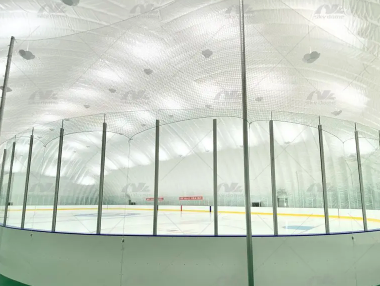
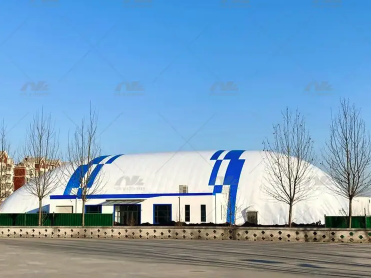
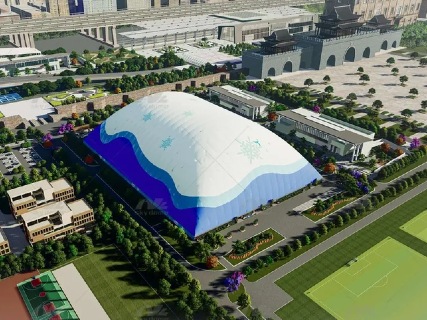
Ice Hockey Domes are transforming the way sports facilities operate. Traditional ice rinks often consume massive amounts of energy for heating, cooling, and lighting, making them expensive and environmentally taxing. Sky Dome Co., Ltd. offers Ice Hockey Domes with advanced insulation, natural lighting, and smart climate systems, saving energy, cutting costs, and supporting eco-friendly ice sports.
Modern hockey training demands flexibility, efficiency, and year-round access. Traditional rinks are costly, time-consuming to build, and often limited by weather or location. An Ice Hockey Dome offers a game-changing solution, combining durability, smart design, and portability.
Ice sports are growing rapidly around the world, but traditional ice arenas can be expensive, slow to build, and inflexible. The Ice Hockey Dome has emerged as a modern solution, combining speed, cost-effectiveness, and comfort. Discover how Ice Hockey Domes outperform traditional ice arenas in cost, setup time, comfort, and energy efficiency, offering flexible, year-round ice sports venues.
Ice sports are growing rapidly, and demand for year-round training and recreational facilities is higher than ever. Traditional ice rinks require heavy construction, long timelines, and high operational costs. Explore an Ice Hockey Dome with air membrane supported structure. Cost-effective, energy-efficient, and quick to install, offering year-round ice training and safe, flexible facilities.
In recent years, air domes have emerged as one of the most innovative and versatile solutions for creating large, enclosed spaces. From sports facilities and temporary event venues to industrial storage and agricultural applications, air domes have gained recognition for their unique design, cost efficiency, and adaptability. But what exactly is an air dome, how does it work, and why are so many industries turning to this technology?
Inflatable domes, often referred to as air domes, have become an increasingly popular solution in sports, events, warehousing, and temporary or semi-permanent facilities. Their versatility, relatively quick installation, and cost-effectiveness make them a strong alternative to traditional construction. However, for businesses, organizations, and individuals considering an air dome, one common question arises: How long do inflatable domes last?