
T: +86-137-0128-0809
E: sales@skyairdome.com
E: sales@skyairdome.com
UNIT 1406B, 14/F, THE BELGIAN BANK BUILDING, NOS. 721 - 725 NATHAN ROAD, KOWLOON, HONG KONG

Views: 0 Author: Site Editor Publish Time: 2026-10-14 Origin: Site


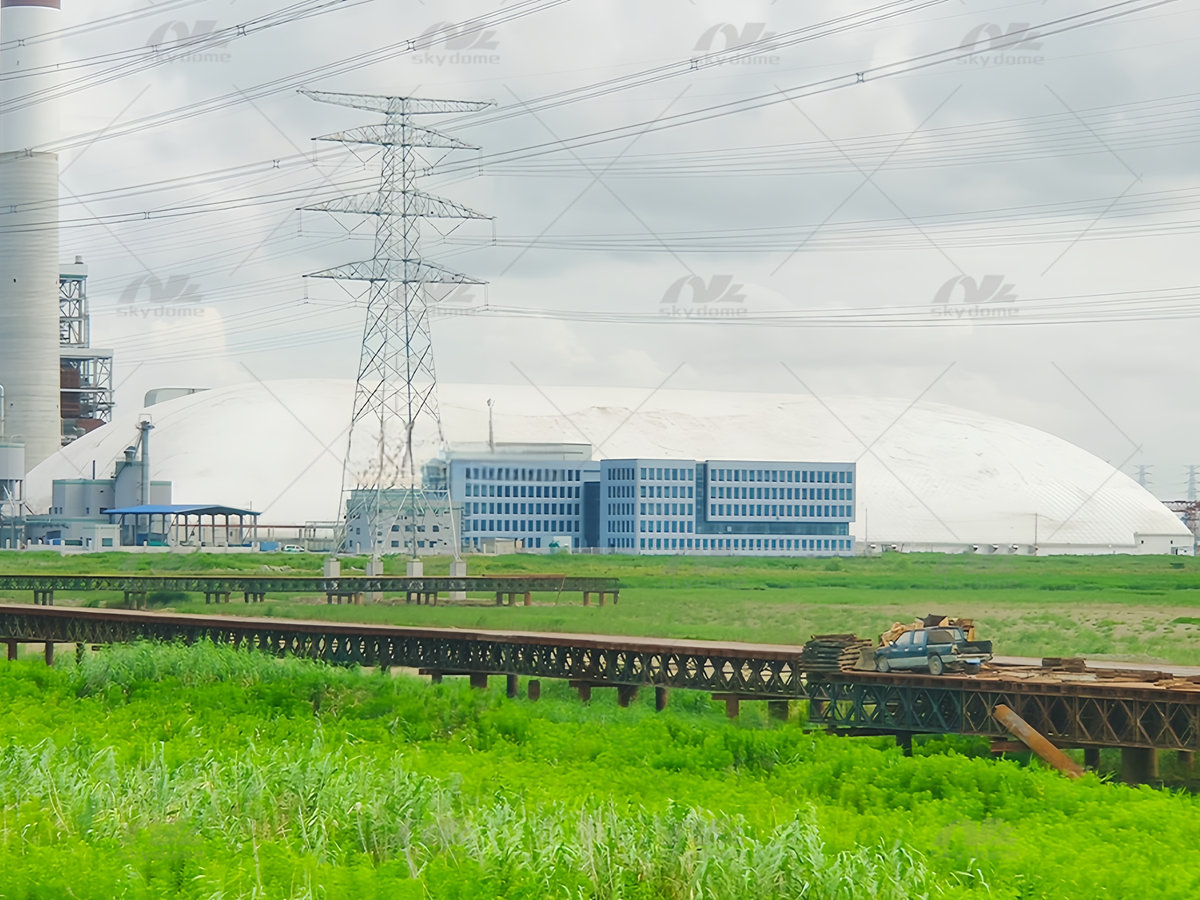
Stringent environmental regulations regarding fugitive dust emissions and groundwater contamination are forcing industrial facilities to abandon open-air coal stockpiling. Regulatory bodies now mandate strict containment protocols to prevent particulate drift and runoff. Traditional enclosed storage solutions require massive capital expenditure, face lengthy construction timelines, and are highly susceptible to corrosive coal dust environments. Steel sheds rust rapidly, while concrete silos demand extensive deep foundations that disrupt site operations. An alternative exists for bulk material handlers. You can deploy a coal storage air supported structure. This rapidly deployable alternative seals the environment completely and accommodates heavy machinery seamlessly. Facility managers achieve these benefits only if they correctly evaluate membrane materials, pressure systems, and access logistics. Proper engineering transforms a simple membrane into a highly controlled, safe containment facility.
Regulatory Compliance: Fully enclosed air domes eliminate fugitive dust emissions, satisfying EPA and local environmental mandates while preventing product loss from wind and rain.
Safety & Ventilation: Advanced air dome ventilation and pressure control systems are mandatory to mitigate spontaneous combustion and disperse hazardous methane or coal dust concentrations.
Material Durability: Utilizing a PVDF coal storage air dome membrane offers superior resistance to UV degradation, chemical corrosion, and fire, outlasting standard PVC alternatives.
Operational Continuity: Custom airlock vehicle doors and conveyor integration allow uninterrupted material handling without compromising the internal pressure of the coal warehouse air dome.
Enclosing a coal stockpile serves specific operational and regulatory objectives. The primary goal is achieving zero visible emissions at the property line. Wind easily carries fine coal particulates across site boundaries, triggering immediate regulatory fines and community complaints. Moisture control represents another critical success criterion. Rain and snow degrade the BTU value of thermal coal. Wet coal causes handling issues inside pulverizers, clogs transfer chutes, and reduces boiler efficiency. A fully sealed environment prevents moisture ingress, preserving the fuel's optimal combustion profile. Minimizing upfront capital expenditure remains a priority for plant managers. You need a structure that meets environmental mandates without draining the facility budget or requiring multi-year construction phases. Success means deploying a compliant enclosure that integrates with existing yard layouts and material handling equipment.
Evaluating storage options requires comparing upfront costs, foundation requirements, and construction speed. Traditional steel-frame buildings demand extensive concrete foundations to support heavy structural columns. Concrete domes require massive material logistics, complex formwork, and months of continuous pouring. An air supported structure relies on internal air pressure rather than rigid frames. This drastically reduces material volume and site preparation time. Foundation requirements shrink to a simple perimeter ring beam or earth anchor system. Construction speed accelerates from months to weeks. The continuous energy required to run inflation blowers offsets some initial savings. However, preventing coal loss from wind erosion and avoiding environmental penalties delivers immediate financial value.
Storage Type | Foundation Requirement | Construction Speed | Internal Columns | Dust Containment |
|---|---|---|---|---|
Steel-Frame Shed | Deep concrete footings | 6 to 12 months | Yes (limits machinery) | Moderate (joints leak) |
Concrete Silo | Massive structural slab | 12 to 18 months | No | High |
Air Supported Structure | Perimeter ring beam | 4 to 8 weeks | No | Maximum (airtight seal) |
Bulk coal storage requires massive spatial volume. Traditional buildings struggle with wide spans, requiring internal support columns that obstruct heavy machinery. Front-end loaders, bulldozers, and stacker-reclaimers need unobstructed maneuvering room to operate safely and efficiently. Air domes achieve clear-span widths exceeding 100 meters without a single internal column. You utilize the entire internal footprint, maximizing the volume of coal stored per square foot. The flexible nature of the membrane allows custom footprint designs. You can adapt the structure to irregular site boundaries, avoiding existing underground utilities or access roads. This scalability ensures facilities can expand storage capacity rapidly as operational demands increase, simply by extending the membrane profile and upgrading the blower capacity.
Navigating local building codes delays industrial projects. Permanent structures like concrete silos trigger rigorous zoning reviews, soil testing, and permanent property tax assessment increases. Municipalities frequently classify air domes as semi-permanent or temporary structures because they lack rigid steel frames and deep foundations. This classification significantly expedites local zoning approvals. You bypass lengthy environmental impact studies typically required for permanent buildings. The temporary designation often reduces property tax burdens, keeping operational overhead low. If facility logistics change, you can deflate, pack, and relocate the dome to a different sector of the yard. This mobility offers unmatched asset flexibility for dynamic mining and power generation sites.
The outer shell dictates the longevity of the structure. Standard PVC membranes degrade quickly under harsh industrial conditions, becoming brittle and prone to tearing. You must specify a PVDF coal storage air dome membrane. Polyvinylidene fluoride (PVDF) architectural fabric provides superior technical specifications. It resists UV degradation and chemical corrosion from airborne sulfur compounds released by the coal. Self-cleaning properties are mandatory. Coal dust settles on the exterior, absorbing heat and reducing light transmission. PVDF coatings allow rain to wash away particulate buildup naturally, maintaining light translucency and reducing surface temperatures. Flame-retardant certifications are non-negotiable. The membrane must meet NFPA 701 standards, ensuring it self-extinguishes and prevents flame spread in a highly combustible environment.
Air pressure alone cannot withstand severe weather events. Large-span domes require external reinforcement to survive high winds and heavy snow. Engineers deploy a structural cable harness system over the membrane. This network of high-strength steel cables distributes aerodynamic loads evenly across the foundation, preventing the fabric from tearing under extreme stress. Wind and snow load ratings depend on geographic deployment. Coastal regions require dense cable grids to withstand hurricane-force winds, while northern climates demand specific profiles to shed heavy snow accumulation. The internal pressure system communicates with external anemometers. It increases inflation pressure automatically to stiffen the structure during high wind events, ensuring the dome remains rigid and secure.
An airtight perimeter seal prevents dust escape and maintains structural inflation. The foundation anchors the upward lift generated by internal pressure. Engineers typically specify concrete ring beams for permanent installations. Engineers mandate soil compaction testing before pouring the ring beam. The anchor bolts must meet specific pull-out strength requirements, often exceeding 10,000 pounds of force per bolt, to counteract the massive uplift generated by the pressurized envelope. The membrane attaches to the concrete using continuous steel clamping plates. This creates a hermetic seal that withstands constant tension. For temporary deployments, heavy-duty earth anchors secure the structure deep into the compacted soil. A skirt extends outward from the base of the membrane. Earth or gravel ballast covers this skirt, preventing wind from lifting the edge and stopping fugitive dust from blowing out at ground level.
Bulk coal absorbs massive amounts of light, making interior visibility a challenge. Illuminating a massive black stockpile requires specialized engineering. Standard lighting fixtures pose severe ignition risks, as coal dust accumulation on hot bulbs can trigger explosions. You must integrate HazLoc-rated, explosion-proof LED lighting systems. These fixtures feature sealed, impact-resistant housings and operate at low surface temperatures. Engineers mount them on suspended cable grids or along the perimeter wall. Perimeter mounting simplifies maintenance access, allowing technicians to service lights without operating man-lifts over the coal pile. The lighting design must achieve a minimum of 150 to 200 lux at the working surface. This ensures operators can accurately judge distances when loading hoppers or navigating around the active stockpile, eliminating ignition sources entirely within the hazardous zone.
Coal stockpiles generate heat internally through oxidation. Stagnant air acts as an insulator, trapping this heat within the pile. When internal temperatures reach critical thresholds, spontaneous combustion occurs. Managing the thermodynamics of the stockpile is critical. You cannot simply seal the dome and ignore the air inside. Continuous, engineered airflow prevents heat buildup. The inflation blowers constantly push fresh air into the structure, while exhaust vents release the warm, stale air. This continuous exchange cools the surface of the coal and eliminates the stagnant air pockets that accelerate thermal runaway. Operators must monitor pile temperatures daily to ensure the ventilation strategy remains effective.
Freshly mined coal releases methane gas. Methane pockets trapped inside an enclosed structure create extreme explosion hazards. Airborne coal dust presents an equally dangerous deflagration risk. Proper air dome ventilation and pressure control systems dilute these emissions. They maintain gas concentrations well below the Lower Explosive Limit (LEL). All mechanical ventilation components must meet hazardous location (HazLoc) electrical standards. Engineers specify explosion-proof (Ex-rated) HVAC units and exhaust fans. Motors, switches, and wiring must be sealed against dust ingress. This prevents electrical arcs from igniting the dispersed particulate during routine operation or maintenance.
The structural integrity of the dome relies on precise internal pressure. External environmental factors constantly alter this requirement. High winds push against the membrane, while barometric pressure drops during storms. Variable Frequency Drive (VFD) blowers manage these fluctuations. Smart sensors monitor external wind speeds and internal pressure differentials. The central control panel adjusts the VFD blowers dynamically. If wind speed increases, the blowers ramp up RPMs, increasing internal pressure to stiffen the fabric. When the weather calms, the blowers throttle down. This automated regulation ensures structural stability while minimizing continuous electrical consumption and reducing wear on the blower motors.
Passive ventilation is not enough; you need active monitoring. Integrating thermal imaging cameras allows operators to detect hot spots deep within the stockpile before flames appear. Continuous gas detection sensors monitor carbon monoxide (CO) and methane (CH4) levels. These sensors wire directly into the dome’s central control panel. If gas levels spike, the system triggers emergency ventilation protocols, ramping blowers to maximum capacity. Fire suppression requires careful engineering. Standard sprinkler systems fail in massive open spans. Engineers deploy automated water cannons or deluge systems mounted along the perimeter. They target specific hot spots safely within the pressurized environment, knocking down flare-ups without flooding the entire stockpile.
Front-end loaders and dump trucks must enter the facility continuously. Opening a standard door would release the internal pressure, causing the dome to collapse. You must install vehicle airlock tunnels. These tunnels feature two sets of doors. A truck enters the tunnel through the outer door. The outer door closes, and the inner door opens, allowing access to the stockpile. This prevents depressurization. Facility managers face trade-offs between door types. Rapid-roll fabric doors operate quickly, reducing waiting times for machinery. Heavy-duty steel interlocking doors operate slower but withstand accidental impacts from heavy equipment much better.
Airlock Door Type | Operation Speed | Impact Resistance | Maintenance Frequency |
|---|---|---|---|
Rapid-Roll Fabric | High (Fast cycle times) | Low (Prone to tearing) | High (Sensor adjustments) |
Steel Interlocking | Low (Slower cycle times) | High (Deflects machinery) | Low (Robust tracks) |
Many facilities rely on automated material handling. Tripper conveyors drop coal from above, while reclaimers pull coal from the bottom. Passing these systems through a flexible membrane requires precise engineering. You cannot leave open gaps around the conveyor truss. Engineers design custom sealing boots. These flexible collars attach the membrane directly to the steel conveyor frame, absorbing vibration without tearing the fabric. Localized dust collection systems mount directly at these penetration points. Engineers also install skirt board sealing systems and dust suppression spray nozzles at the conveyor transfer points. These nozzles emit a fine water mist that knocks down airborne dust before it escapes the coal storage warehouse air dome.
Blowing fresh air into the dome means an equal volume of air must exit. This displaced air carries fine coal dust. Releasing dirty air defeats the purpose of an industrial dust containment air dome. You must manage the exhaust nodes. Engineers integrate wet scrubbers or dry dust collectors at the exhaust louvers. These filtration systems strip the particulate from the exiting air stream. Regulatory bodies often require proof of compliance. Installing Continuous Emissions Monitoring Systems (CEMS) at the discharge points provides this data. CEMS track opacity and particulate concentration, guaranteeing clean air discharge and preventing environmental fines.
Worker safety requires dedicated access points separate from heavy machinery. Standard doors are difficult to open against internal air pressure. Personnel enter through revolving doors, which maintain the air seal while allowing continuous foot traffic. Emergency situations demand rapid evacuation. Building codes mandate outward-swinging emergency exits. These doors feature pressure-balanced mechanisms. A counterweight system offsets the internal air pressure, allowing workers to push the door open easily during a crisis. Panic hardware ensures immediate egress without complex latching mechanisms, ensuring compliance with life safety codes.
The primary vulnerability of any air supported structure is power failure. If the blowers stop, the dome deflates. You must engineer absolute power redundancy. A single grid connection is unacceptable. Facilities must install automatic standby diesel generators equipped with automatic transfer switches (ATS). They detect grid failure and restore power within seconds. Redundant blower units are equally critical. If a primary motor burns out, a secondary blower must activate instantly. Uninterruptible power supplies (UPS) protect the central control panels, keeping the sensors and logic controllers online during the generator spin-up phase.
Industrial environments are brutal. Heavy machinery operates in tight proximity to the fabric walls, and accidental impacts happen. A loader bucket might scrape the membrane. Operational wear and tear is a reality. Fortunately, a small puncture does not cause immediate collapse. The continuous airflow system compensates for minor tears automatically. The VFD blowers increase output to maintain pressure despite the leak. Maintenance teams execute rapid thermal-welding repairs. They use handheld hot-air welders to fuse a PVDF patch over the puncture, restoring the airtight seal without requiring facility downtime.
To maintain the structure, implement the following inspection protocol:
Inspect the perimeter concrete ring beam for anchor bolt tension and seal integrity.
Check the vehicle airlock doors for track alignment and sensor functionality.
Verify the VFD blower RPMs match the central control panel setpoints.
Examine the membrane for localized abrasions near the heavy machinery operating zones.
Test the backup diesel generator and ATS sequence weekly.
Temperature differentials create condensation. Cold external air meets warm, humid internal air at the membrane surface, causing water droplets to form on the ceiling. This internal condensation drips onto the coal stockpile, degrading the BTU value of the thermal coal and creating handling problems in the hoppers. You must manage this moisture. Engineers deploy an inner liner insulation system. A second layer of fabric creates a dead-air space, providing a thermal break that prevents condensation from forming. HVAC engineers utilize psychrometric chart calculations to determine the exact dew point inside the dome based on local climate data. Integrating dehumidification units into the primary HVAC system strips excess moisture from the incoming air stream, keeping the interior dry.
To successfully deploy a compliant and safe coal warehouse air dome, facility managers and procurement teams must execute the following phases:
Conduct a site-specific wind and snow load analysis to determine the required cable harness strength for your geographic location.
Consult with an industrial dome engineer to draft preliminary HVAC, dust filtration, and explosion-proof lighting specifications.
Evaluate local zoning laws to confirm the structure qualifies for semi-permanent or temporary permitting status to expedite deployment.
Design a robust power redundancy plan, including ATS generators and UPS backups for all central control systems.
A: A PVDF membrane typically lasts 20 to 30 years. Lifespan depends on UV exposure, local weather severity, and routine maintenance. PVDF offers superior resistance to chemical corrosion and UV degradation compared to standard PVC, making it the required standard for harsh industrial coal environments.
A: The system relies on automatic transfer switches (ATS) and backup diesel generators. If grid power fails, generators activate within seconds to power the blowers. Even if all backup systems fail, the dome deflates very slowly over several hours, allowing ample time for safe personnel evacuation.
A: Yes. Front-end loaders and trucks operate safely using dedicated vehicle airlocks that prevent depressurization. The interior utilizes HazLoc-rated, explosion-proof lighting. Continuous, high-volume ventilation systems are engineered to dilute and extract diesel exhaust fumes and airborne coal dust.
A: The continuous airflow system pushes stale air out through designated exhaust nodes. Engineers integrate wet scrubbers or dry dust collectors at these exhaust louvers. These filtration systems capture airborne coal particulate before the air discharges into the environment, ensuring regulatory compliance.
A: Yes. They fully satisfy EPA mandates for zero fugitive dust emissions. Building departments generally classify them as temporary or semi-permanent structures. This classification often expedites the permitting process and avoids the extensive zoning reviews required for permanent concrete or steel buildings.
A: Prevention relies on eliminating stagnant air. The dome's ventilation system provides continuous air exchange to cool the stockpile. Operators use thermal imaging cameras and temperature monitoring probes to detect hot spots early. Gas sensors monitor methane and carbon monoxide levels continuously.


